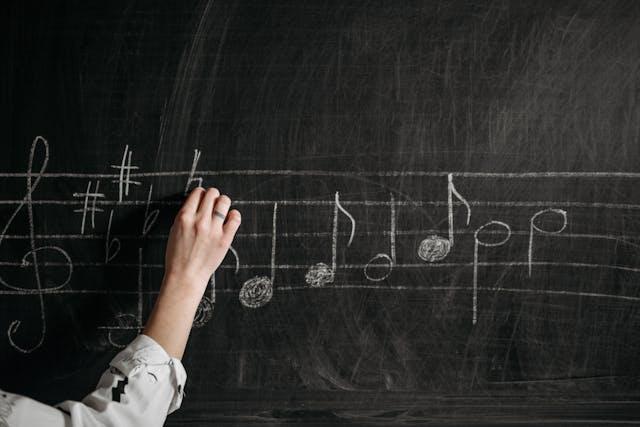
Musical training acts as a workout for the brain that helps students perform better in school. Researchers often find that children who play instruments develop stronger spatial-temporal skills, which are necessary for solving multi-step math problems. Learning to read sheet music also mimics the process of learning a new language, which often leads to higher literacy rates and better verbal memory. Students in Baltimore who participate in regular music programs frequently see a noticeable lift in their standardized test results because of these cognitive shifts.
Does Learning Piano Help with Mathematics?
Piano lessons provide a physical way for children to understand abstract math concepts like fractions and ratios. When a student plays a piece of music, they must divide whole notes into halves, quarters, and eighths in real-time. This constant mental division builds a strong foundation for proportional reasoning. Most teachers suggest starting piano at age six, as this is when the hand becomes large enough to span the keys comfortably. Consistent practice at the keyboard teaches a child how to break down complex tasks into smaller, manageable steps.
The relationship between the keyboard and the brain involves both hemispheres working together. A student must read two different lines of music while their left and right hands perform separate tasks. This bilateral integration improves the way the brain processes information, leading to faster problem-solving in a classroom setting. Parents find that the discipline required to master a piano sonata often transfers directly to the focus needed for a long math exam.
Why Are Vocal Lessons Important for Language Skills?
Vocal training helps children distinguish between different tones and pitches, which is a fundamental part of phonological awareness. Students who take singing lessons usually have an easier time picking up the nuances of speech and grammar. The best time to start formal vocal training is around age seven or eight, when the vocal cords have matured enough to handle controlled exercises. Younger children can certainly sing for fun, but structured lessons at this age provide the greatest academic boost.
Singing requires a student to memorize lyrics, understand phrasing, and interpret the emotional meaning behind a text. These skills are identical to those used in reading comprehension and creative writing. By learning how to project their voice and breathe correctly, children also gain a significant amount of self-confidence. This social-emotional growth allows them to participate more actively in class discussions and public speaking assignments at school.
Can Violin Practice Improve Memory Retention?
Violin students must rely heavily on their auditory memory because the instrument does not have frets to guide finger placement. A child must hear the correct note in their head before they play it, which sharpens their ability to store and recall information. Many educators recommend beginning the violin as early as Grade 1 because the instrument comes in very small sizes. Early exposure to this level of auditory training helps students remember verbal instructions from their teachers more accurately.
The precision needed to hold a bow and press down on thin strings develops fine motor skills that are far more advanced than those of the average peer. This physical coordination supports better handwriting and dexterity in science labs. Because the violin requires constant tuning and adjustment, students learn the value of “active listening.” They become more aware of their surroundings and more attentive to the details of their schoolwork, which leads to fewer careless mistakes on assignments.
How Do Guitar Lessons Build Critical Thinking?
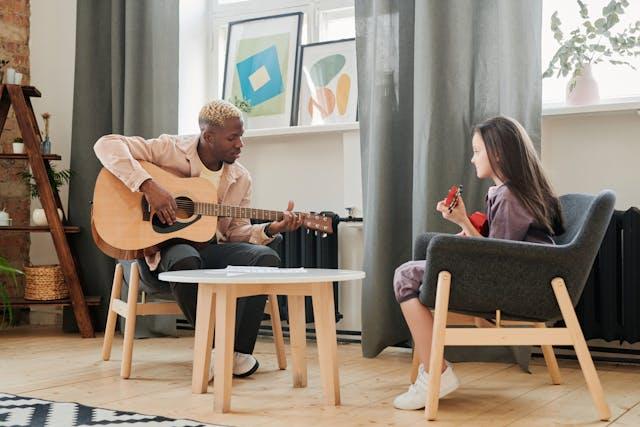
Guitar students often learn how to transition between chords, which requires them to anticipate the next move while still finishing the current one. This ability to plan ahead is a hallmark of high-level critical thinking and executive function. Children can usually start guitar lessons in Grade 1. This ensures their fingers are strong enough to press down the strings. It is an instrument that rewards patience and logical thought, as the fretboard is essentially a grid of mathematical patterns.
Learning the guitar involves a mix of melody and harmony that forces the brain to multitask. A student might be strumming a rhythm with one hand while picking out a specific scale with the other. This type of mental flexibility helps students switch between different subjects at school with less stress. They become better at seeing the “big picture” while still paying attention to the small details that make a project successful.
What Is the Link Between Drums and Logic?
Drumming is entirely about the logic of time and the division of beats. A drummer must keep a steady pulse while creating complex layers of sound, which is a direct application of rhythmic math. Most instructors recommend starting drum lessons at age six or seven, so the child has the physical reach to hit the different parts of the kit. This instrument is particularly helpful for children who struggle with focus, as it requires total physical and mental engagement.
The coordination required for drumming involves all four limbs moving in different patterns at the same time. This creates new neural pathways that improve a child’s overall reaction time and cognitive processing speed. Students who play the drums often find that they have a better grasp of physics and timing in their science classes. The physical outlet of the drums also reduces school-related stress, making it easier for them to approach their homework with a clear and calm mind.
How Do Brass Instruments Assist with Science Concepts?
Playing a brass instrument like the trumpet or trombone involves an understanding of vibration and air pressure. Students learn how changing the shape of their lips and the speed of their breath alters the pitch, which is a practical lesson in acoustics. The best age to start brass lessons is typically nine or ten, as the child needs sufficient lung capacity and adult teeth. This late start allows the student to approach the instrument with a more mature understanding of its mechanics.
The discipline of practicing a brass instrument teaches a child that consistent effort leads to tangible results. They see how a week of focused breathing exercises leads to a clearer tone. This cause-and-effect relationship is a fundamental part of the scientific method. Students learn to experiment with their technique to find the best sound, which mirrors the way they might approach a science experiment in a classroom.
Why Do Woodwind Lessons Support Better Reading Habits?
Woodwind instruments like the flute or clarinet require a student to read music while managing complex fingerings and breath control. This level of coordination improves the brain’s ability to process visual information quickly. Most woodwind students begin their journey around age nine or ten, when their hands are large enough to cover the holes or keys. The steady stream of air needed to play these instruments also has a calming effect on the nervous system, helping children stay focused during long reading sessions.
Reading music for a woodwind instrument is very similar to reading a sentence. The student must look ahead to see what is coming next while still performing the current note. This skill, known as “eye-hand span,” is exactly what allows a fast reader to scan a page of text efficiently.
Children who master a woodwind instrument often find that their reading speed and comprehension levels increase because their brains are trained to handle a high volume of visual data.
Frequent Questions About Music and Academics
Do Music Lessons Help with ADHD or Focus Issues?
Yes, music lessons provide a structured environment where a child must focus on a single task for a set period. The immediate feedback of hearing a wrong note helps them self-correct and stay engaged with the material. Over time, this builds the mental stamina needed for long school days.
Is It Ever Too Late to Start an Instrument for Brain Benefits?
The brain remains plastic throughout a person’s life, but the most significant academic gains happen during the developmental years. Starting an instrument in elementary or middle school provides the strongest foundation for cognitive growth. Even teenagers can see improvements in memory and mood by starting a new musical hobby.
How Many Hours of Practice Are Needed to See School Improvements?
Consistency is more important than the total number of hours. Small sessions of twenty to thirty minutes a day are usually enough to create the neural changes that support better test scores. The key is to make music a regular part of the child’s daily routine.
Improve Your Music Strategy
Choosing the right educational partner requires looking past basic activity or childcare. At The Music Workshop, we offer deep industry knowledge, professional instructors, and proactive year-round music planning. We actively work to improve your child’s cognitive skills while keeping them fully engaged with their specific instrument and goals. If you are ready to fix your music strategy, contact us today to schedule your first advisory meeting.