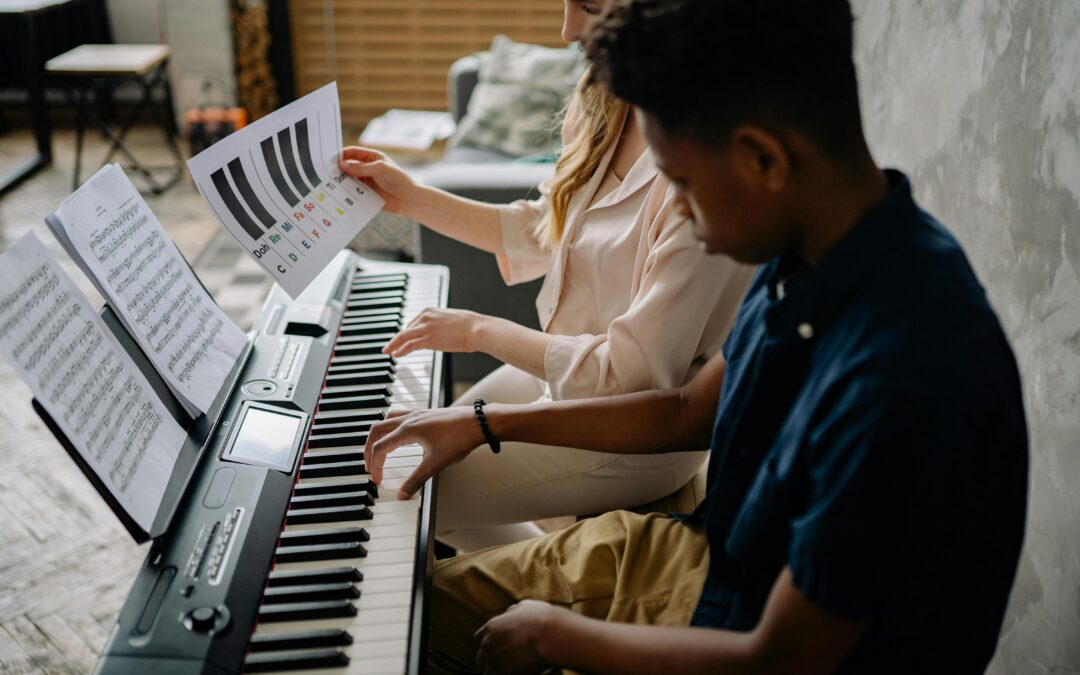
Learning an instrument helps children become better listeners by training the brain to isolate specific frequencies, rhythms, and tones within a complex soundscape. This process, known as auditory discrimination, strengthens the neural pathways responsible for focus and attention. Through music, children move from hearing (a passive physical act) to listening (an active cognitive process), which improves their ability to follow instructions and engage in social conversations.
Does Music Training Improve Focus in Loud Classrooms?
One of the most significant challenges for children today is the cocktail party effect—the ability to focus on a single voice in a noisy room. At The Music Workshop, we see how instrumental training acts as a workout for this specific skill. When a child plays in an ensemble or even practices with a metronome, they must ignore distractions to stay in time.
Research in neurobiology suggests that musicians have a more efficient auditory cortex. Because they spend hours distinguishing between a sharp note and a flat note, their brains become highly tuned to the nuances of human speech. This means a child who studies music is often better equipped to hear a teacher’s voice over the hum of an air conditioner or the chatter of classmates.
The Link Between Rhythm and Reading
It may seem strange to link a drum or a piano to a book, but the brain processes musical rhythm and the rhythm of speech in the same area. A child who can’t hear the beat in a song often struggles to hear the syllables in a word. By learning an instrument, children develop a heightened sense of timing.
This timing is crucial for listening. Effective listening requires the brain to predict when a speaker will pause or emphasize a word. When students at The Music Workshop master complex time signatures, they are actually training their brains to map out sounds in real-time. This translates to better reading comprehension and a more intuitive grasp of language patterns.
Moving from Passive Hearing to Active Listening
There is a massive difference between a child hearing a sound and a child processing its meaning. Passive hearing is what happens when the television is on in the background; active listening is what happens during a violin lesson. To play an instrument, a child must constantly monitor their own output and compare it to an ideal standard.
This feedback loop is the ultimate exercise in active listening. At The Music Workshop, we teach students to ask: Is this too loud? Is the pitch correct? Am I rushing? This self-assessment requires a level of auditory focus that most children never develop through standard school activities. Once a child learns to listen to themselves this closely, they naturally begin to listen to others with the same intensity.
How Tuning an Instrument Sharpens the Ear
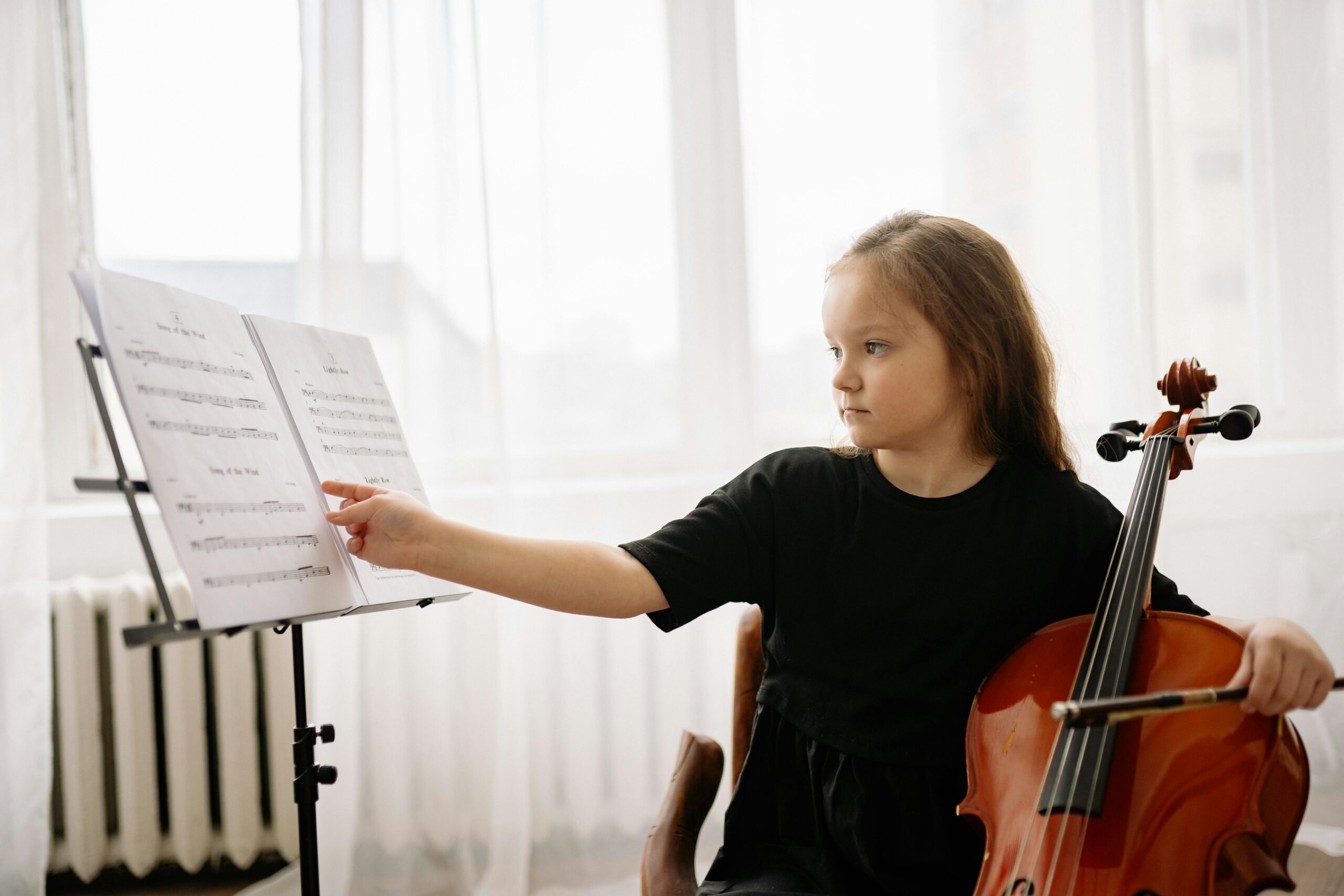
Tuning a guitar or a violin is one of the best ways to improve auditory processing. It requires a child to recognize tiny differences in vibration. This is known as pitch discrimination. While it helps them play in tune, the real-world benefit is much broader.
Children with high pitch discrimination are better at detecting prosody in speech—the rising and falling of a voice that indicates emotion or intent. For example, a child who has musical ears can more easily tell if a friend is being sarcastic, sad, or excited based on the musicality of their voice. Music education literally helps children hear the emotions of those around them.
The Ensemble Effect: Social Listening Skills
When a child plays music with others, they cannot simply focus on their own part. They must listen to the person to their left and right to stay synchronized. This is social listening in its purest form. If one person speeds up, everyone must listen and adjust.
This teaches children that listening is a collaborative act. In a world where many people wait for their turn to talk rather than truly listening, music students learn that the silence between notes is just as important as the notes themselves. The Music Workshop emphasizes ensemble work because it builds the patience and empathy required for high-level communication.
Why Practice Builds Auditory Stamina
Modern digital life is filled with micro-distractions that shorten a child’s attention span. Learning an instrument is the antidote to this. Working on a single piece of music for months requires auditory stamina—the ability to stay focused on a specific sound task for a long period.
In our lessons, we see that as a child’s musical skills grow, their ability to sit through a long lecture or a complex explanation also improves. They aren’t just getting better at the piano; they are building a brain that is hard-wired for long-form attention. This stamina is a competitive advantage in higher education and future careers.
Memory and the Audio Loop
Listening is closely tied to working memory. To follow a multi-step instruction, a child must hold those sounds in their head while they execute the task. Music accelerates this by requiring students to memorize melodies and chord progressions.
When a student at The Music Workshop learns a song by heart, they are using their phonological loop—the mental tape recorder that stores sounds. Strengthening this loop through music makes it easier for children to remember what they heard in class or during a conversation at home. They aren’t forgetting their chores; they are simply training their brain to hold onto auditory information longer.
Common Pitfalls: When Hearing Isn’t Enough
Many parents assume that because their child likes music, they are listening to it. However, streaming music in the background can actually encourage the brain to tune out sound. To get the listening benefits, the child must be an active participant.
This is why structured lessons are more effective than just listening to the radio. Active participation—hitting a key, pulling a bow, or singing a note—forces the brain to engage. If a child is only a passive consumer of sound, they may actually develop habits of tuning out rather than tuning in.
How to Support Auditory Growth at Home
You don’t need to be a musician to help your child become a better listener. Here are three insider tips we share with parents:
- The Silent Game: Sit in silence for one minute and see how many distinct sounds you can identify (the fridge humming, a bird outside, etc.). This builds auditory awareness.
- Dynamics Talk: When listening to music in the car, ask your child to tell you when the music gets louder or softer.
- Repeat the Rhythm: Clap a short rhythm and have your child clap it back. This builds the auditory memory mentioned earlier.
FAQ: People Also Ask
Can music help children with ADHD listen better?
Yes. Music provides a structured anchor for the brain. Because music has a clear beginning, middle, and end, it helps children with ADHD practice sustained attention in a way that feels rewarding rather than draining.
At what age do the listening benefits of music start?
The benefits start as soon as a child begins to engage with rhythm and pitch—often as early as three or four years old. However, the most significant neurological changes in auditory filtering occur between the ages of seven and twelve.
Does it matter which instrument they choose?
While all instruments help, those that require constant tuning (like violin or voice) or those that involve multi-part harmony (like piano or guitar) offer the most intense workout for the ears.
Is listening the same as obeying?
Not exactly. Music improves the ability to hear and process information. Whether the child chooses to follow the instruction is a matter of discipline, but music ensures that I didn’t hear you is no longer a valid excuse!
Conclusion
Learning an instrument is much more than a hobby; it is a fundamental rewiring of how a child perceives the world. By sharpening auditory discrimination, building memory, and fostering social empathy through ensemble play, music education creates individuals who don’t just hear the noise—they understand the message.
At The Music Workshop, we are dedicated to more than just playing notes. We believe that by teaching a child to master an instrument, we are giving them the tools to navigate a noisy world with clarity and focus. Whether your child is just starting or moving to advanced levels, the gift of listening will serve them for a lifetime. Contact us today for more information.