

Managing a student music schedule alongside daily homework requires a structured routine. Short, focused sessions help children build skill without getting tired. Setting specific daily times builds strong musical habits quickly.
How Does a Structured Schedule Help Student Musicians?
A set daily routine removes the argument about when your child should practice. Kids complete tasks faster when they expect them at the exact same hour every day.
Consistency matters far more than long hours spent at an instrument. Studying music for fifteen minutes five days a week works better than one two-hour session on Sunday. Short sessions keep young minds active. Your child retains motor skills faster through quick daily repetitions.
Brain development speeds up when kids mix short practice routines with regular homework breaks. Music training builds strong memory functions in young students. A clear visual schedule on the wall keeps children accountable without constant parental nagging.
Why Should You Choose Short Practice Sessions?
Fifteen-minute practice windows keep young students focused on their primary goals. Children often lose concentration after twenty minutes of intense physical movement.
- Break complex musical pieces into two-measure sections.
- Focus on fixing one specific rhythm mistake per session.
- End the daily routine on a positive note with a favorite song.
Short blocks prevent physical fatigue in fingers and hands. Young muscles need time to adapt to holding violin bows or pressing guitar strings. High focus during short bursts creates long-term success.
How to Integrate Practice into After-School Hours
Matching music time with existing daily habits makes scheduling effortless. Children adapt well when one activity leads directly into another.
Place instrument time right after an afternoon snack. Food provides the quick energy needed for active listening and hand movement. Completing music tasks before starting school written homework leaves the evening open for family relaxation. Some students prefer playing instruments early in the morning before the school bus arrives. Morning sessions clear the head and build quick confidence for the rest of the school day.
Every family must test different time slots to find what fits their daily cadence. Stick with the chosen time slot for three weeks to build a permanent habit.
Setting Up a Dedicated Space for Instrument Practice
A quiet corner without screens or loud television noise helps kids stay focused. Keeping the instrument out of its case encourages spontaneous playing.
Leave sheet music open on the stand so your child can start immediately. Searching for books or tuning devices wastes precious minutes. Good lighting and a comfortable chair support correct physical posture. Poor seating choices cause back strain and shorten practice endurance. Keeping all supplies like picks, rosin, and metronomes in one bin saves time.
A well-organized environment signals to the brain that it is time to work.
How Can Parents Support Progress Without Nagging?
Positive encouragement builds internal motivation faster than constant correction. Parents should praise steady effort rather than perfect pitch execution.
Sit nearby during practice to offer quiet support without taking over the lesson. Ask your child to teach you a simple scale or song measure. Explaining a task to someone else deepens the student’s own understanding. Celebrate small achievements like mastering a difficult measure. Tracking daily progress on a wall chart builds visible momentum that kids love to show off.
When frustration happens, take a two-minute break to stretch hands and drink water.
Balancing School Homework and Music Goals
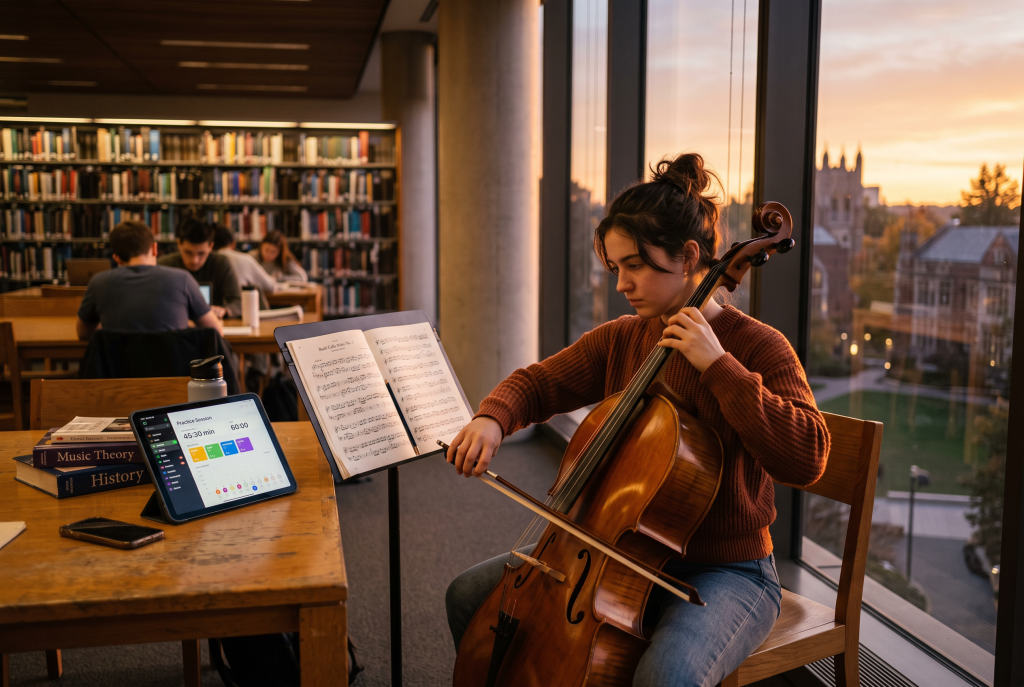
School assignments and music practice build complementary cognitive skills in young brains. Both activities train focus, patience, and analytical thinking.
Create a weekly master calendar that shows all test dates, sports games, and music assignments. Adjust practice length during exam weeks instead of skipping sessions entirely. Dropping session length down to five minutes maintains physical finger memory. Scale back expectations during heavy school testing periods to lower child stress. Returning to normal routine timing after school exams finish is easy when daily momentum never completely stops.
Teaching kids to adjust their routines during busy weeks builds time management skills for life.
How to Overcome Practice Frustration in Kids
Learning a new musical instrument presents natural physical and mental hurdles. Children often feel like quitting when a song becomes technical.
Slow down the tempo using a metronome app on a phone. Playing a song slowly gives the brain time to process complex finger movements. Isolate problem spots instead of playing the piece from the beginning every time. Repeating a single mistake over and over creates bad muscle habits that take weeks to fix. Take three deep breaths when anger builds up over a tough passage.
Switching to an easier song for five minutes resets the child’s mood instantly.
FAQ
How long should a beginner student practice each day?
Beginners thrive with fifteen to twenty minutes of daily instrument work. Short daily sessions build physical hand strength without causing mental fatigue.
What should we do if my child wants to quit music practice?
Reduce the daily practice time to five minutes and talk with their teacher. Shifting to fun, popular songs often renews excitement quickly.
Should my child practice on weekends during the school year?
Weekend practice keeps momentum going, but keeping one full rest day prevents burnout. Short Saturday morning sessions leave the afternoon open for recreation.
Can music practice improve academic performance in school?
Playing an instrument builds strong math, reading, and memory skills in children. Regular practice trains the brain to focus on complex tasks for longer periods.
Ready to Start Your Child’s Musical Journey?
The Music Workshop helps students build strong music habits that fit around busy school schedules. Contact us to learn more about our structured private music lessons. We look forward to guiding your family toward lifelong musical success.