
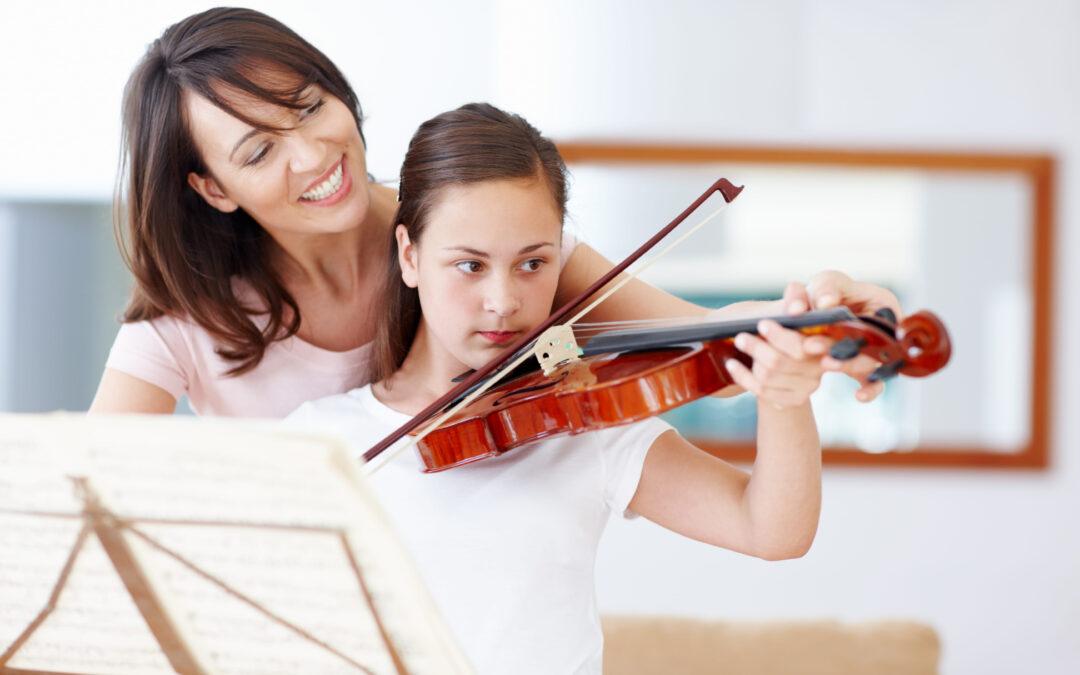
Many parents believe that enrolling a child in premium violin lessons is a hands-off investment where progress is the sole responsibility of the instructor and the student. However, the high drop-out rate for beginner string students often stems from the isolation and frustration experienced during solo home practice.
When a child is left to navigate the complex physical and cognitive demands of a string instrument alone, the frustration plateau becomes an insurmountable wall. To ensure success, you must adopt the at-home practice partner framework.
Why Parent Involvement Matters in Early Violin Education
Young children lack the cognitive development to organize a practice session by themselves. They cannot easily spot micro-errors in their posture, track their assignments, or maintain focus for extended periods. When you step into the practice space as an active observer, the quality of that practice time changes immediately. Your presence keeps your child anchored, turning what could feel like isolating homework into a shared family project.
Early violin playing requires intense physical coordination. A child cannot look at their own left-hand wrist angle or bow placement while reading music notes. An attentive parent serves as an extra set of eyes and ears, catching structural issues before they turn into permanent muscle memory.
Accelerated Skill Acquisition:
Active parental supervision helps reduce repeated mistakes during home practice, allowing students to grasp weekly assignments nearly twice as fast.
Reduced Muscle Fatigue:
Early correction of posture and hand positioning helps prevent unnecessary strain, making practice sessions more comfortable and sustainable for your child.
Stronger Accountability:
Children tend to stay more focused and goal-oriented when a parent is present and actively tracking lesson tasks and progress.
Heightened Spatial Awareness:
Your external viewpoint allows you to notice bow angles, arm alignment, and positioning that your child cannot accurately see while playing.
Setting Up the Ideal Home Practice Environment
Set up a dedicated corner or room where the violin and all accessories stay ready to use. Keep the area away from TVs, noisy appliances, and active play from siblings. Turn off phones and tablets unless they are being used for practice tools like a metronome or tuner.
Your child should have a sturdy, armless chair that allows both feet to rest flat on the floor when seated. Place a stable music stand at eye level to prevent slouching or neck strain. Good lighting is important so sheet music can be read clearly without eye strain. Hardwood or tiled flooring can also help provide clearer sound feedback compared to heavy carpeting, which may soften the tone for beginners.
Creating a Focused and Comfortable Practice Space
While you don’t need a studio setup, you do need a space where your child can concentrate without interruption. A fixed practice spot also helps build routine, as your child begins to associate that area with music and focus.
Ensure the space allows free bow movement and minimal distractions. Keep essential items, the violin, rosin, the shoulder rest, and lesson materials, within easy reach so practice sessions can start smoothly. Keep TVs, tablets, and unrelated devices turned off unless they are used for tuning apps, metronomes, or lesson recordings. This helps maintain focus throughout the practice session.
Your child’s practice area should include:
- A stable music stand adjusted to eye level
- Bright lighting for clear music reading
- Enough space for full bow movement
- A quiet environment with minimal distractions
- Easy access to the violin, rosin, shoulder rest, and lesson materials
Building a Structured Home Support System for Violin Practice
To support consistent progress, home violin learning should be structured like a studio environment rather than casual practice. This means combining a stable routine, a properly designed physical setup, active coaching support, and clear feedback methods. When these elements work together, practice becomes more focused, efficient, and sustainable for young learners.
1. Managing a Consistent Daily Practice Routine
A strong practice habit is built through consistency, not long or irregular sessions. Instead of forcing rigid schedules, involve your child in setting a predictable daily practice time. Short, focused sessions, around 20 minutes daily, are more effective than long weekend practice blocks. This removes decision fatigue and turns practice into a natural part of the day rather than a task to negotiate.
2. Optimizing the Practice Environment and Setup
The physical space directly affects learning quality. Create a quiet, distraction-free area where your child can fully focus on sound and technique. Equip the space with essentials like a music stand at eye level to support posture, proper lighting to reduce strain, and a stable chair that encourages correct sitting alignment.
Adding a metronome also helps develop steady rhythm and timing. A well-set environment prevents physical tension and supports long-term technical growth.
3. Acting as a Supportive Practice Coach
You don’t need formal musical training to support your child’s violin practice; you need consistency, attention, and a clear focus on the basics taught in lessons. Use the teacher’s notes or short lesson recordings as your guide, and help your child stay aligned with those instructions during home practice. The goal is steady reinforcement of correct habits, not correction overload.
Focus on the core technical areas:
- Straight Bow Path: Help your child keep the bow moving evenly across the strings without drifting.
- Posture and Balance: Encourage an upright, relaxed position while sitting or standing.
- Left-Hand Relaxation: Watch for unnecessary tension in the thumb and fingers that can slow progress or cause fatigue.
Your role is to gently remind, observe, and reinforce these fundamentals so your child builds correct technique over time without developing bad habits.
4. Using Simple Recording for Self-Correction
Phone recordings can be a powerful learning tool when used intentionally. Record short practice moments and review them with your child to help them observe their own technique. Encourage them to notice issues like uneven bowing or pitch inaccuracies. This shifts feedback from opinion-based correction to self-awareness, helping your child develop independent correction skills over time.
Learning the Basics Alongside Your Child
Try to stay actively engaged during weekly lessons so you can support effective home practice. Take clear notes, record short clips of the teacher demonstrating exercises, and ask questions about the weekly assignment when needed.
Catching tension early helps prevent injury and stops incorrect habits from becoming permanent muscle memory. You don’t need to become an expert violinist, but you do need to understand the core technique and weekly goals so you can guide practice with confidence and consistency.
Here’s a short setup checklist for parents:
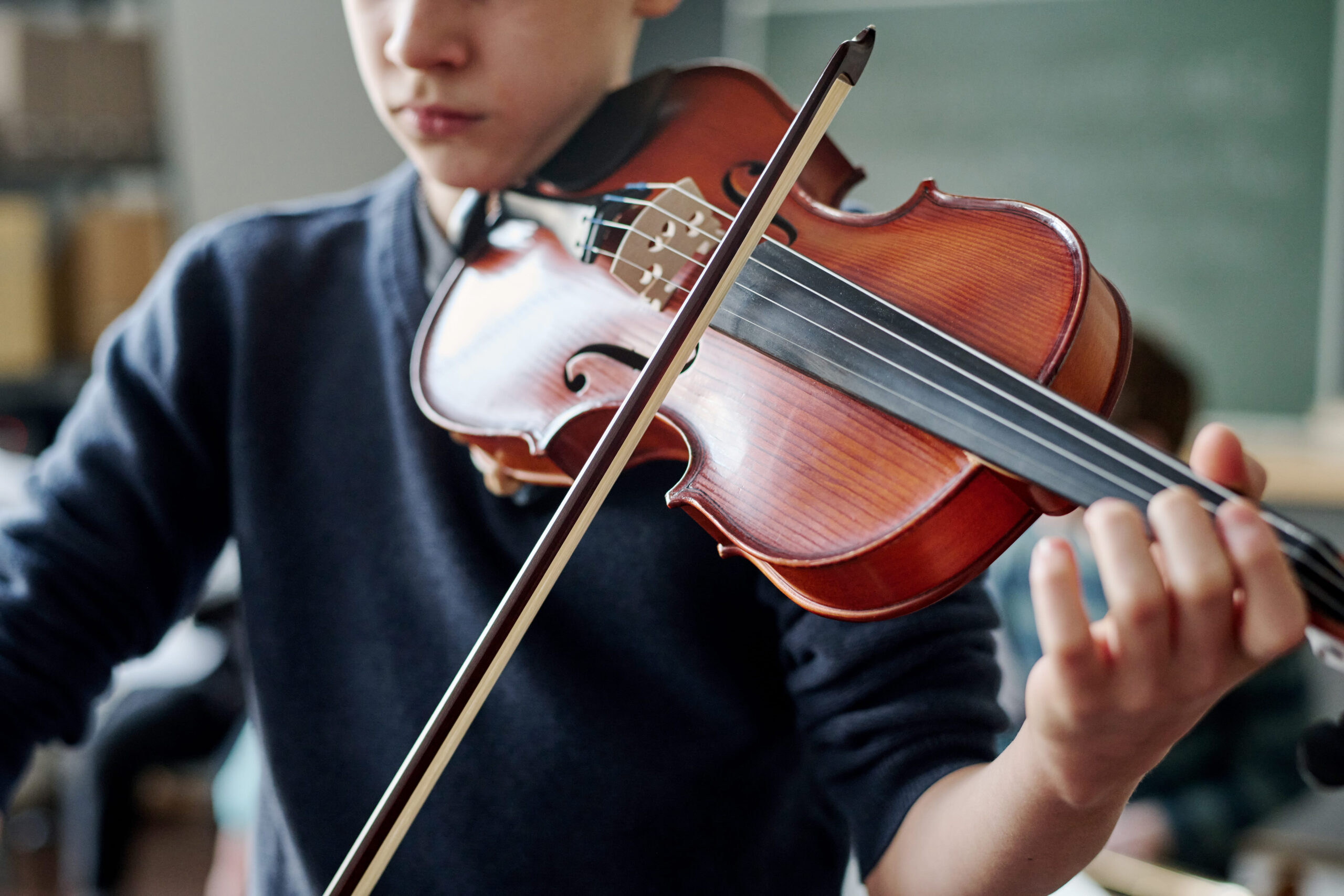
- Instrument parallel to the floor (no dipping scroll)
- Left wrist straight and open (avoid “pancake” wrist position)
- Right thumb bent and relaxed at the bow frog
- Right index finger lightly resting on the bowstick padding
- Shoulders relaxed and not raised
Breaking Music Down into Tiny Components
When a child encounters a difficult measure in a piece of music, their instinct is usually to play the entire song from the beginning, stumble at the hard part, and keep going. This repeats the mistake and trains the brain incorrectly.
Help your child isolate the exact spot causing the trouble. Have them practice just two or three notes, or a single string crossing, multiple times until it feels smooth. Once they master that small fragment, slowly integrate it back into the rest of the musical phrase.
Prioritizing Tone Production Over Reading Notes
During home practice, listen closely to the tone being produced. A scratchy or harsh sound usually comes from too much bow pressure or an incorrect angle. A weak or airy tone typically means the bow is too close to the fingerboard or moving too slowly.
Guide your child to maintain a straight, controlled bow in the space between the bridge and the fingerboard for a clear, steady tone. Core techniques you should know are:
Rosining Protocol
Apply fresh rosin every 2–3 practice sessions to maintain proper friction between the bow and strings. This helps produce a clean, consistent tone.
Bow Placement (Sound Lane)
Keep the bow positioned in the “middle lane” between the bridge and fingerboard. This balance is essential for stable, focused sound production.
Natural Weight Usage
Encourage your child to use the arm’s natural weight rather than pressing down with force. This prevents tension and supports smoother sound.
Controlled Bow Speed
Practice slow, even bow strokes across the full length of the bow. This builds control, consistency, and tone stability over time.
Outdated Practices and Critical Mistakes to Eliminate
Modern behavioral psychology has disproven many legacy music-parenting tactics that relied on shame or sheer endurance. To protect your child’s motivation, you must eliminate these counterproductive habits.
- The Nagging Feedback Loop: Constant verbal corrections create “correction fatigue.” Replace “That’s out of tune” with inquiry-based prompts such as, “How did that G-string transition feel to you?” or “Did you hear the difference in the ring of that note?”
- The Illusion of Autonomous Practice: It is unrealistic to expect a young child to self-regulate, troubleshoot complex micro-movements, or maintain proper ergonomic form unassisted. Early music education is a team sport; your presence provides the psychological safety net required for them to take risks.
- Prioritizing Quantity Over Micro-Goals: Counting mindless, repetitive minutes on a timer is a recipe for mediocrity. Shift the focus to targeted task completion. Instead of practicing for 30 minutes, set a goal of executing four bars with a completely straight bow arm and clear tone three times in a row.
Step-by-Step Practice Session Framework
Building strong violin skills requires both a clear practice routine and consistent exposure to music beyond the practice room. A structured approach helps remove frustration from daily practice, while real-world musical experiences build motivation, identity, and long-term commitment.
A focused session works best when it follows a predictable flow. This ensures every minute is intentional and productive rather than reactive or chaotic.
Phase 1: Preparation and Tuning
Start each session with a quick setup routine. Tune the instrument, adjust the shoulder rest for comfort, and apply rosin to the bow if needed. Include light physical stretches to relax the body. End this phase by setting one clear, achievable goal so your child knows exactly what to focus on.
Phase 2: Focused Problem Practice
Spend most of the session working on the most difficult sections, not the easiest ones. Isolate a single measure or technique and slow it down significantly using a metronome. Repeat it correctly multiple times before adding it back into the full piece. This prevents repeated mistakes from becoming habits.
Phase 3: Performance and Positive Closure
End practice with something your child can play well. Let them perform a simple piece or polished section for family members. This builds confidence, creates a sense of achievement, and ensures they associate practice with success rather than stress.
Building Musical Identity and Long-Term Engagement
Parental involvement must extend outside the practice room to build a lasting emotional connection to the instrument. If the violin only exists within the four walls of a practice room, it becomes an isolated academic subject rather than a living art form.
- Active Exposure to Great Performances: Introduce your child to violin legends and professional performers such as Heifetz and Hilary Hahn. Listen to recordings together and talk about the stories behind the music they are learning. This gives practice meaning beyond repetition.
- Live Concert Experiences: Attend orchestral or chamber performances whenever possible. Watching skilled musicians live helps your child connect effort with outcome and transforms abstract skills into real inspiration.
- Social and Ensemble Participation: Encourage involvement in youth orchestras or group ensembles. Playing with others turns music into a shared experience, builds confidence, and helps sustain long-term interest by making learning social rather than isolated.
FAQ: Supporting Your Beginner Violinist
1. How long should a beginner violinist practice each day?
For most beginners, 15–20 minutes of daily, focused practice is ideal. It is far more effective to have short, successful sessions every day than long, frustrating ones once or twice a week.
2. Do I need to know how to play the violin to help my child?
No. Your role is to be an “expert observer.” By taking notes during lessons and helping your child follow the teacher’s specific technical instructions at home, you provide the necessary structure for success.
3. What should I do if my child gets frustrated during practice?
Shift the focus to a “micro-goal” that they can easily achieve, such as playing one single note with a beautiful tone. Always try to end the session on a positive note with a piece they already know and enjoy.
4. Why is my child’s bow arm always crooked?
A straight bow requires complex muscle coordination in the elbow and wrist that takes time to develop. Use a mirror or a “bow guide” tool, and provide gentle, non-judgmental reminders to keep the bow parallel to the bridge.
To maximize the benefits of your home practice setup and ensure your child learns via a proven, premium pedagogical methodology, partner with our elite The Music Workshop instructional talent. Explore our tailored instrument programs and schedule an introductory session today.